Pastry Passport Week 🎱: Vegan Singaporean Confectionery Cake with Gan Chin Lin 🇸🇬
Hello!
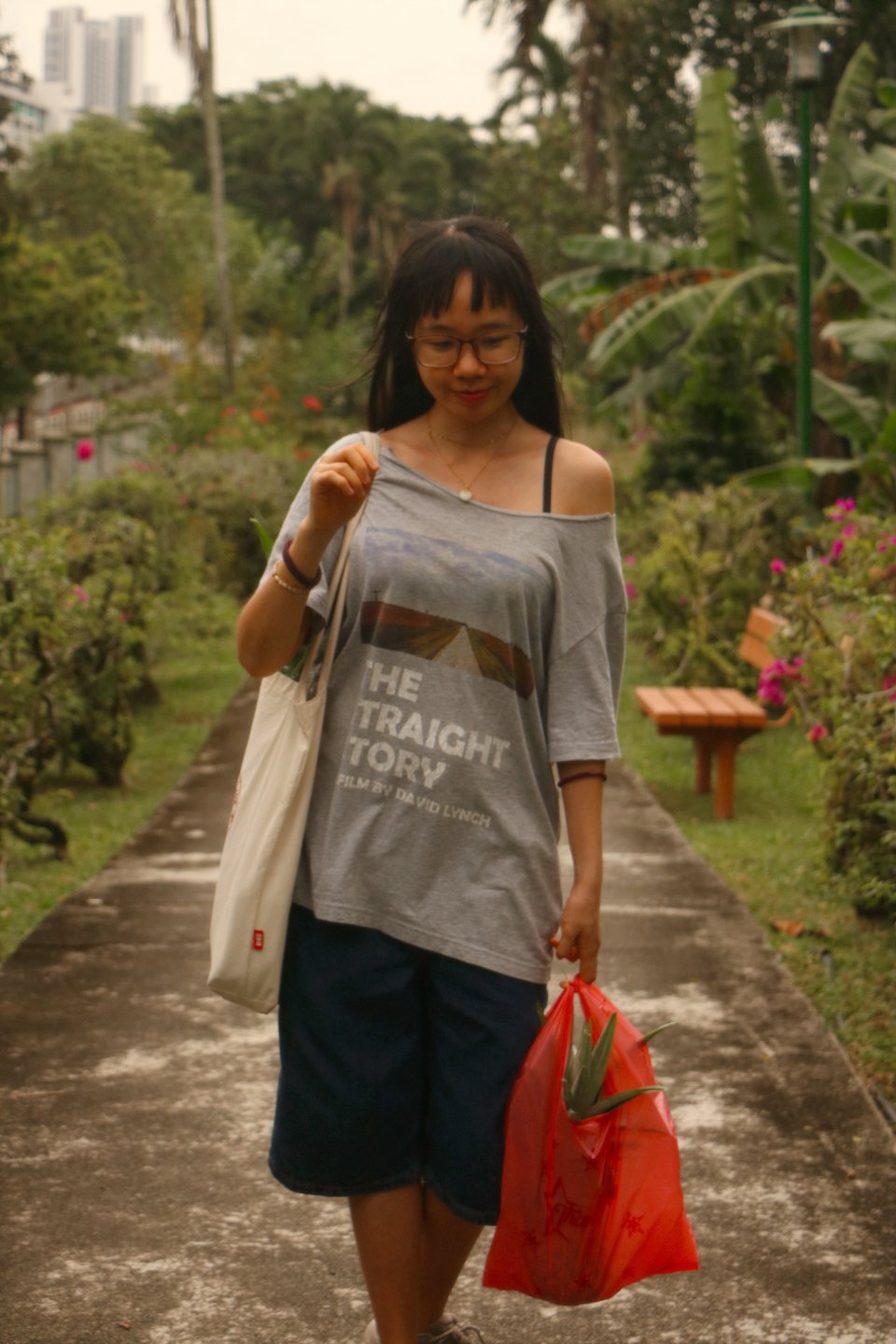
I feel extremely lucky that this week I was able to connect with Gan Chin Lin, a Singaporean baker, writer, and recipe developer whom I’ve respected and followed for a good, long while. I owe so much to Lin — her Instagram feed and newsletter are bona fide treasure troves of the most thoughtful food writing and research on Singaporean baking and traditions that exist. She highlights and shares the most exciting recipes with flavors and histories I’ve never even dreamed of, and if that wasn’t enough, her recipes are all plant-based and vegan. Lin is incredible.
Lin has inspired my baking so much over the years, with her at-once extremely casual veganizing of remarkably challenging baking projects that simultaneously comes from a very deliberate and intentional envisioning of the world through a plant-based lens. She’s someone I look up to as a baker and a writer and I’m honored that she shared some valuable insight into this unbelievable cake that she developed:
Vegan Sponge Cake with Malted Vegan Buttercream + Roasted Peanut and Caramelized Melonseed Topping, or for short:
Singaporean Confectionery Cake

Rich, malty, sweet, and salty. I am enamored of how delicious this cake is with the combination of its base components: vegan Swiss meringue buttercream (!), vegan sponge cake (!), vegan peanut rubble and roasted melonseeds. It’s for my folks who like caramel flavors, salty, peanuty things, and crunch and texture. It’s wonderful. And I’m glad we got to ask Lin about not just this cake, but her work, as well.
Three more weeks of Pastry Passport, and this one is dedicated to my vegans 🫰🏻. Cakes will be out and reserved for folks with Pastry Passports from 9am to 12pm; unlike last week, where we had a bit of a hiccup with our torta de goiaba, there will be extra on the counter starting at 9am for anyone coming in without a passport, too. (My apologies for that.) A cake, which is best shared with another person, will be $10.
Here’s our conversation with Lin, one of the best food writers, thinkers, and bakers I know. 🇸🇬
Downtime Bakery: Tell me a bit about yourself and your baking background. What are you working on now? How did you get into baking?
Gan Chin Lin: I’m a writer and recipe developer from Singapore. My writing focuses broadly on domestic labour, Singaporean food traditions, and alternative baking, as they intersect — through a regenerative lens. I’m always thinking about the organic, ongoing conversation between heritage, the rhythms set by nature, and navigating food futures.
My recipe development work, and my newsletter, is naturally embedded within these concerns: looking at heritage recipes and sweetmaking techniques as a node to connect our modern day endeavours with history and intention. We explore ingredients with a view of their unfolding relationship to ecology and to human cultures over history, and the potential they hold in the material realities of the current world: thinking about the possibilities inherent in millet, coconut milk, vegetable and root-based flours, legumes; sweet starches like cassava… The goal is for heritage and tradition to be living knowledge practised in the now, instead of a static romanticised frame of the past: thus equipping every home cook with frameworks for agency and pleasure. Agency and pleasure don’t have to be mutually exclusive, either: baking offers an experiential medium for us to think through problems instead of obfuscating or abstracting them.
For the last few years, too, I’ve been researching Singapore’s unique baking culture — which is a distinct canon in its own right, although it hasn’t been articulated in the general consciousness the same way Hong Kong or Japan’s baking cultures have. While many are quick to associate the presence of bread and cake to colonialism alone, or the mere borrowing of recipes from neighbouring countries, I find that these generalisations gloss over a more compelling and generative history. Our baking culture is a palimpsest of knowledge enriched by a profusion of global influences (including relationships with pastry chefs across the world!), existing idioms of sweetness, visual beauty, and aroma from our heritage cuisines (palm sugars, coconuts, pandan), and is always framed by the unforgivingly hot climate that is our year-round norm (but now increasingly so for countries all over the world with global warming).
I’ve been developing plant-based versions of classic local confectionery staples, which is (in my view) an organic way of extending the legacy of nimbleness, radical imagination, and adaptive tenacity that exists within our baking ethos. Especially in a timeline which demands agility, creativity and open-mindedness in reconsidering what we chose as ‘staple’ ingredients, as bakers all over the world steel against supply chain shocks and freak weather. My hope is for this to eventually become a book.
I started slowly phasing out factory-farmed and animal-based foods in secondary school, after reading a lot of Carol J Adams (The Sexual Politics of Meat) and other forms of literature — including recipe blogs — that introduced me to the inequalities which undergird modern food systems. My relationship to ‘veganism’ is not an overfidelity to any rule-based belief structure, but rather an evolving engagement with and appraisal of the materials I work with, what I consume: thinking about the supply chains, workers; the political, the economic, the climate.

DTB: What is your relationship to baking in Singapore? Tell me more about these confectionery shops and what kinds of things they usually sell.
GCL: Old-school confectioneries in Singapore ply an awesome range of goods. Black Forest and fruit cream cakes, pandan chiffon cakes, soft cream-filled swiss rolls, durian and custard choux puffs, meat pies; pouchy buns filled with salty-sweet mung bean, red bean paste, taro paste, kaya, caramelised coconut; French loaves and foam-pored Hailam bread… Cases and trays of these, alongside traditional kuehs, curry puffs, and Chinese-style pastries, biscuits, mooncakes. Some even have a pandan waffle kiosk appended to the store: churning out crisp pandan waffles with fillings of peanut butter, kaya cheese, blueberry jam, and more.
There’s a mixed reception to these confectioneries on the whole (there are exceptions to this broad category). In the present scene, against large bakery chains and more New Nordic-influenced artisan bakeries, they’re facing a particular crossroads. For many, little of their operational ethos has changed from the milieu that these old-school bakeries grew out of: which means their relevance is eternally bound to a historicised sense of retroactive nostalgia and peoples’ highly personal taste memories, as well as a general public expectation that these goods must be priced cheaply. But many also intentionally suppress prices (and thus operational and ingredient costs), being as resourceful and economical as they can, because these bakeries are situated in the heartlands all over Singapore; they are insistent that their neighbourhoods — senior citizens, working-class families — should be able to afford their breakfast bun and a birthday cake.
It’s a complicated picture, with many definitions of ‘value’ coming into conversation, but I’m currently writing about it! And I think the nimbleness and ingenuity, central to the baking happening within these confectioneries, is a crucial part of our food history.
DTB: What makes this kind of sponge different or special to Singapore? How should it taste? What is your ideal version?
GCL: The sponge cakes that we’re showcasing thanks to Downtime this week are simple in principle, but exhibit some of the best traits of Singaporean baking, to me. The salty buttercream has been a feature of old-school confectioneries since the 70s, without being advertised as such, though invoking the ‘salted’ nature is trendy today. It was a way to deepen and balance the buttery sweetness of the supple, glossy cream that is piped in intricate chenilles, treble clefs, and flowers: extra reliant on sugar for structure in order not to slump in the heat.
The roasted melonseeds, dark-tanned almond flakes, and roasted peanut rubble are characteristic of Love Confectionery in particular. Natural nuts and seeds — often byproducts of other produce — have always been used in the filling of kuehs for their shatteringly toasty fragrance, their deeply aromatic nuttiness adding pops of richly bittersweet flavour, notes of roasted marzipan and potato chip. These tone the sensation of sugar on the palate, and add such a fun crunch to cut through the soft textures of silky cream and egg foam-based sponges. So simple! — but it makes simple American buttercream spread thinly onto layers of plain sponge taste complex and luxurious. Confectioneries often work on this basis: making different flavour permutations of a certain item, strategically maximising variety and diversity out of a certain yield.
We’ve adapted this template with plushy vegan cake that stays moist and tender over various temperatures, a lighter malty buttercream, and — using some technique — drawing out the salty-sweet contrast and layered crunch even further with caramelised nuts.
DTB: Tell us what you wish people understood about Singapore as well as what you wish people understood about vegan baking. What makes it special? What is special about being a baker where you live? What do you wish people knew about your baking traditions in Singapore?
I wished people looked beyond the signifiers of our tourism industry or the social media scrim that paints the narrative of our rapid economic growth in broad strokes: the glitzy skyscrapers and techno-botanical infrastructures, the rhetoric of profit and capital growth. Even that our hawker centres present some utopic model of ‘cheap’ food that can work perfectly elsewhere — instead of being a phenomenon created by the specific combination of human relationships, space and place, government policy, as well as existing cooking traditions; and one that is facing a real crisis precisely because it’s expected to be always cheap, all the time. We have a rich cultural scene and many communities of people persisting to build a better, equitable life, together, for one another; to preserve pockets of biodiversity, cook awesome food, make great art (poetry, emo and math rock, independent zines, films, theatre, etc)… Come and walk around where people live instead of only looking at TikTok or top ten lists, talk to people, swing by local events and productions.
I wish people also understood that ‘vegan baking’ or ‘alternative’ baking isn’t something modeish or new-fangled; if you only look closely, it’s always been inherent to the ways by which humans intuitively brought sweetness — not strictly necessary, yet crucial for joy and pleasure — to our lives. Additionally, in an era of quick-shifting food supply and climate breakdown, an adaptive perspective and open mind around how we cook and eat isn’t really an option. It isn’t so much a mode of identifying by political beliefs or personal ideologies, as there is an urgency to this work.
But this isn’t something to approach with fear or melancholia. People are paralysed by the ‘no ethical consumption under capitalism’ bugbear, but this doesn’t trample on the fact that our choices can bring us closer — and in alignment to — the kind of future and way of living that we picture for ourselves. Participation is a powerful act: we are incorporated into what comes next, and networked endeavours can produce a survivable metabolism. I like to think it’s a way of deepening our connections and relationships to different ingredients, of stepping outside oneself; baking is an inherently pastoral act. And I think the very mission at its heart is the understanding that cooking and eating are crucial, cherished pleasures which structure our lives.


Add a comment: