Pastry Passport Week ❻: 鳳梨酥 Taiwanese Pineapple Cakes with Hsin-Hui Chen of 30 Percent Patisserie 🇹🇼
Hello!
Unsurprisingly, bakers tend to plan things eons in advance. Looking back in my email recently, I realized I had gotten in touch with Hsin-Hui Chen — a Philly-based pastry chef who runs 30 Percent Patisserie, a microbakery with pastries inspired by her Taiwanese heritage — in April asking if she’d like to come do a pop-up at Downtime. Now, four months later, it’s all happening: Tomorrow! At the bakery! She’ll be here popping up with her wonderful pastries, from 9am until sellout!
This is especially exciting for me because I’ve followed Chen’s journey for a long time. We’ve never met in person but another thing to know about bakers? We’re always forming bonds from afar. And when I asked Chen if she’d be a part of the Pastry Passport, as well as come in and bake with us for her pop-up, it was destiny that she sent over her recipe for Taiwanese pineapple cake 鳳梨酥, a cake that my best mates Pelin and Andrew once gave me after they got back from visiting family in Taiwan. I didn’t know then that this buttery, flaky pastry with caramelized pineapple jam inside is “how we show love in Taiwan,” as Chen put it. But it warms my heart now to think about.
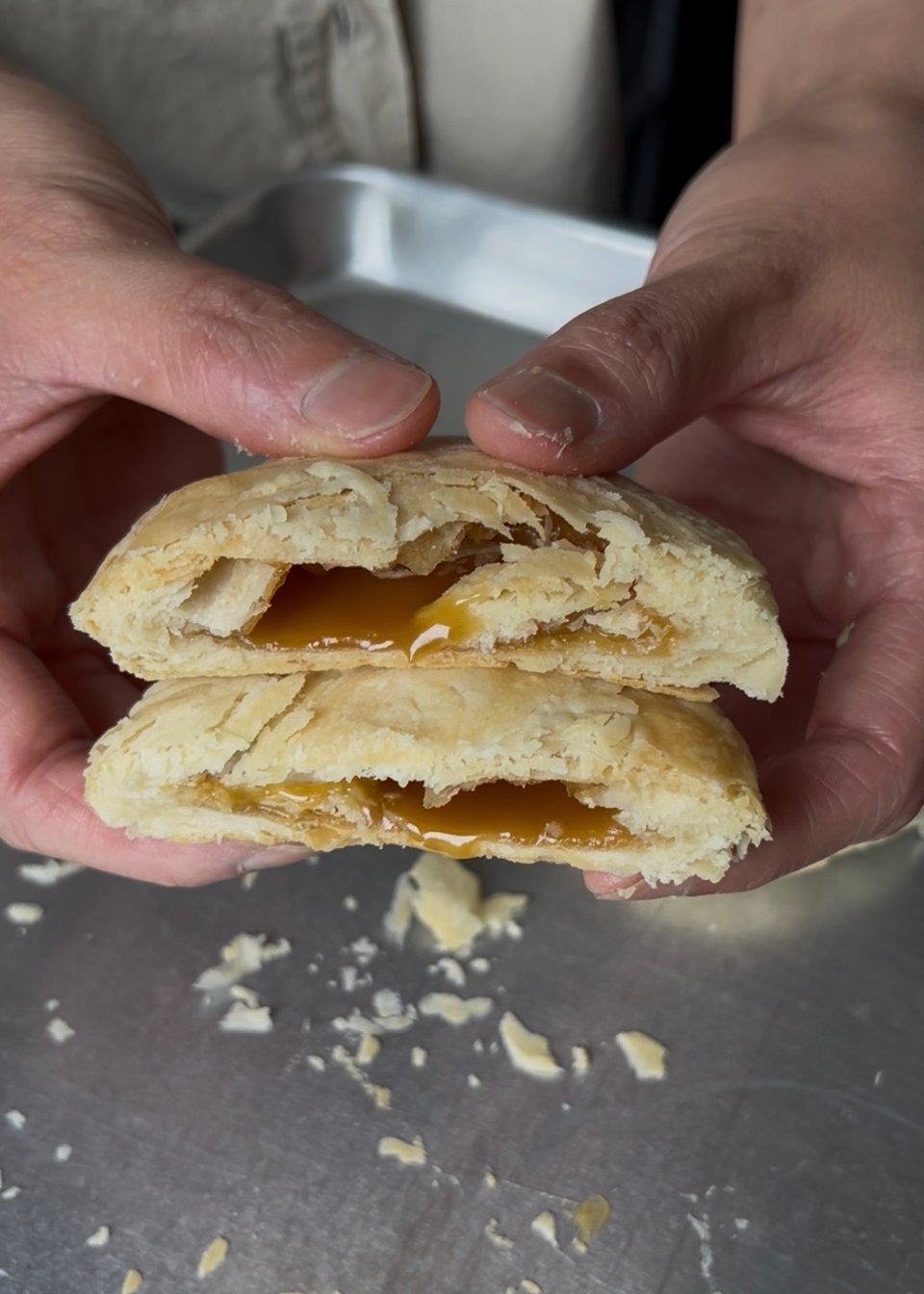
As usual, we’ve Downtime-ified Chen’s recipe slightly, by making ours with soft stone-ground pastry flour that we milled in-house. The resulting pastry is delicate, flaky, and buttery, with a deeply caramelized pineapple jam inside, spiked with malt syrup. We’ll have these on the counter at 9am, for $4, as well as some special treats from Chen, too. Arrive early to snag some!
Read on below to hear about Hsin-Hui Chen’s path from Taiwan to the U.S. to Japan and back to the U.S. and what it means to her to be baking pastries from her background. 🇹🇼

Downtime Bakery: Tell us a bit about yourself and your baking background. How did you get into baking?
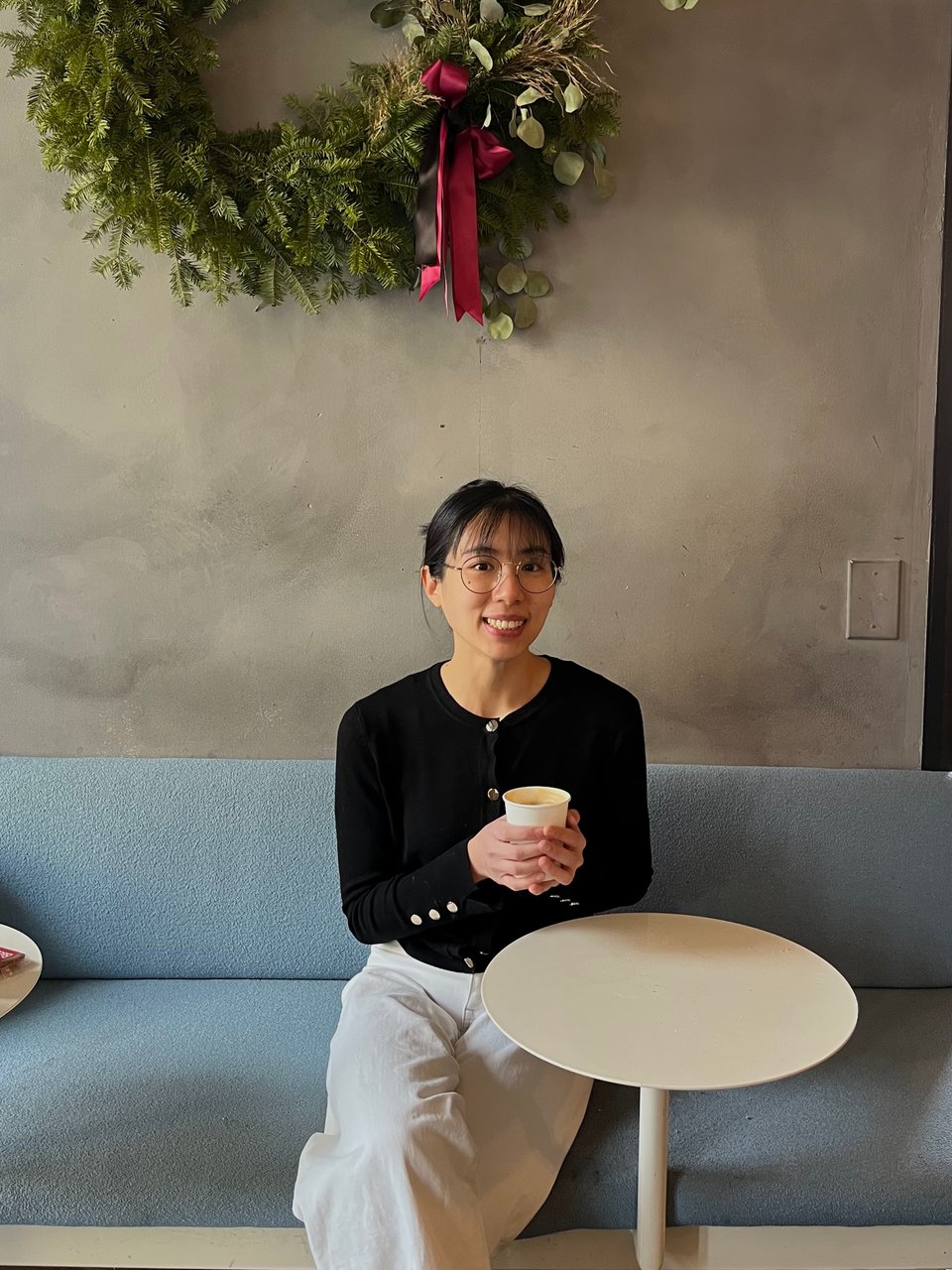
Hsin-Hui Chen: I’m originally from Taiwan and moved to the U.S. with my family when I was around 16. I first became interested in baking when I was about 13. I would pick out baking books at bookstores and teach myself from the recipes. I just really enjoyed the process of making things. When I moved to the U.S., whenever I missed something I couldn’t easily find here, I would try to make it myself.
Baking wasn’t immediately the path I chose, though. I also grew up loving to cook and spent a lot of time in the kitchen with my mom and aunts. After being pretty unsure about what I wanted to do with my future, I eventually decided to study culinary arts at Johnson & Wales University. While I was there, I gradually realized that the traditional restaurant kitchen environment probably wasn’t the right fit for me. At the same time, I had always dreamed of living in Japan, and I was really interested in the style of Asian-French pastry that I wasn’t seeing very often in the U.S. at the time. So I left school and moved to Tokyo on my own.
I ended up spending four years there studying, working, and living. I had five different part-time jobs, all related to food and kitchens. Looking back, every one of those experiences has shaped the way I work today.
When my visa ended, I returned to the U.S. To be honest, by that point the difficulties I experienced while living and working in Japan had worn down a lot of my passion for baking. For a while, I wasn’t even sure I wanted to keep doing it. But I also couldn’t accept that something I had spent so many years learning and working toward would just end there.
I slowly found my way back to baking through making desserts for my sister’s wedding, cakes for friends, and eventually starting Thirty Percent Patisserie. Somewhere along the way, I realized that rather than putting all of my energy into someone else’s business, I wanted to see what would happen if I put that same energy into something of my own — even knowing that it might be a much more difficult path.
DTB: After following that path, where have you landed now?
I’m really figuring out what that “something of my own” looks like. I’ve realized that my passion for baking doesn’t come from chasing whatever is trendy at the moment. It comes from making and sharing things that I genuinely love and believe are worth sharing. More and more, that has brought me back to the flavors, pastries, and memories I grew up with in Taiwan.
DTB: What is your relationship to Taiwanese pineapple cake?
H-HC: Growing up, pineapple cake didn’t have a particularly special meaning to me. It was just something that was always around and would somehow show up in my house from time to time. I didn’t even particularly love pineapple cake itself. But there would always be someone in the family saying, “Hsin-Hui, have a pineapple cake, it’s good!” because that’s how we show love in Taiwan. And because I loved the buttery crust, I never said no.
I would open the package and eat all the crust around the outside first, then eat the pineapple filling in the middle afterward — I wouldn’t waste it!
That crumbly, flaky texture is something I’ve always loved about Taiwanese pastries. I also love that they don’t necessarily have to be overly sweet. A lot of the flavor comes from bringing out the aroma and character of the ingredients themselves.
It wasn’t until I had been away from Taiwan for several years and started missing the flavors I grew up with that I began to see pineapple cake differently. I realized that somewhere along the way, it had become such a symbolic Taiwanese pastry.
Pineapple is called “ong-lai” (旺來) in Taiwanese, which sounds like “prosperity comes,” so it carries the meaning of good fortune. Pineapple cakes have become a very common gift in Taiwan — whether Taiwanese people are giving gifts to each other or visitors are looking for something to bring home from Taiwan, pineapple cake is often one of the first things that comes to mind.

DTB: What makes pineapple cake special? How should it taste?
H-HC: What makes pineapple cake special to me is actually something I didn’t realize until I moved to Japan. Being away not only from Taiwan but also from my family in the U.S., pineapple cake became one of the easiest tastes of home to come across.
Because it’s such a common Taiwanese gift, whenever friends or family visited me in Japan, there was a good chance someone would bring pineapple cakes. Around the same time, Taiwanese food and culture were also becoming more popular in Japan, so pineapple cakes gradually became easier to find there, too. Somehow, something I didn’t care much about growing up became something I started to love because it reminded me of home.
Traditionally, pineapple cake filling isn’t necessarily made with only pineapple. It often includes winter melon and tends to be sweeter. In more recent years, more bakeries have started making versions with pure pineapple filling, where you can really taste the fruit’s natural acidity and texture.
That’s the kind of pineapple cake I personally love: a filling where you can still taste the pineapple and feel some of its fibers, with enough acidity to balance the sweetness, surrounded by a buttery, crumbly crust that works together with the filling rather than just holding it.
And of course, for my perfect pineapple cake, there has to be a little more crust than filling.
DTB: What do you wish people understood about cooking and baking from Taiwan? What is special about being a baker with Taiwanese heritage? What do you wish people knew about your baking and cooking traditions?
Taiwanese food may not always be the most elaborate or visually impressive, but you can taste the ingredients for what they are. There’s a kind of sincerity to it that I really love.
But maybe Taiwanese food on its own was never meant to represent anything. Maybe what makes it special is the people behind it — the people who cook it, make it, serve it, and share it with others.
If I were a baker living in Taiwan today, I probably wouldn’t consider what I do particularly special. But being a baker with Taiwanese heritage in the U.S. feels different, simply because there aren’t that many of us.
Taiwan has become much more visible internationally in recent years, but a lot of what people hear about Taiwan comes from the news. I think what I want to share is a much simpler, more everyday side of Taiwan — the Taiwan where people are just living their lives, where someone tells you to eat a pineapple cake because that’s how they show they care.
DTB: Any closing thoughts?
H-HC: I still have a long way to go, but I just want to thank everyone who has supported me along the way. I wouldn’t have made it this far without you.

Add a comment: